Modules
Broad range of RF & Microwave modules. Typical use is in test and measurement systems, RF design, research facilities and universities. All modules are constructed from a machined aluminum housing with excellent mechanical, EM shielding and thermal properties. They all use SMA connectors.
The RF & Microwave modules are divided in several subcategories.
- Power splitter / combiners
- Directional couplers
- DC blocks and Bias-Tees
- RF amplifiers

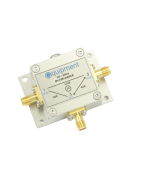
Subcategories
-
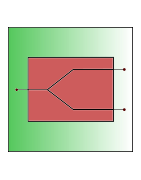
Power splitter /...
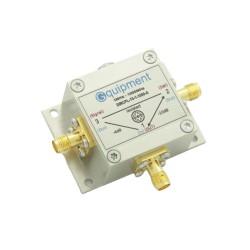
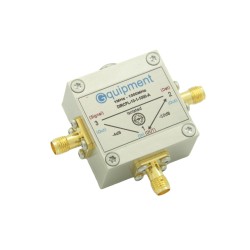
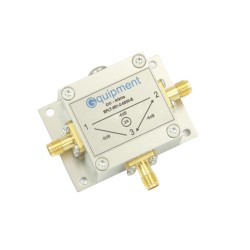
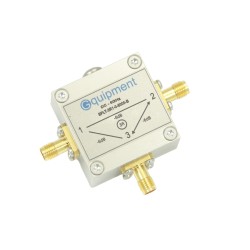
Power splitter / combiners from DC up to 6 GHz
- Both resistive types (6dB insertion loss) and Wilkinson designs (3dB insertion loss)
- Hybrid couplers with excellent isolation
- Very high return loss
- Solid aluminium case
-
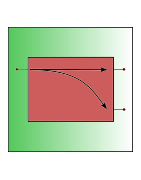
RF Directional Couplers
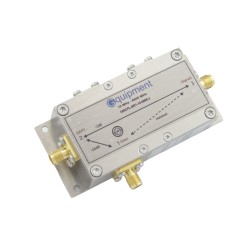
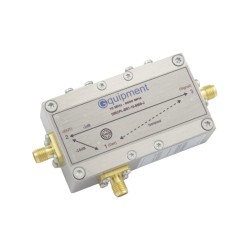
This family of directional couplers are all based on a balanced bridge design. They are used to monitor the RF power traveling along a transmission line by taking a small sample of it. Due to their directional characteristics, they can measure both incident and reflected power.
Their bridge-based design gives them a very wide bandwidth (from a few 'MHz's to many 'GHz's) while having a high directivity. The latter is a measure of the accuracy with which the coupler can take a power sample from the transmission line.
Directional couplers can be found in many RF systems. For example, in systems that measure RF power, in so-called 'VSWR bridges' that measure an impedance mismatch (of an antenna for example) and you also find them in the test sets of VNAs. -
RF amplifiers
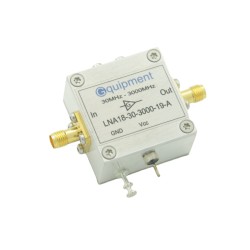
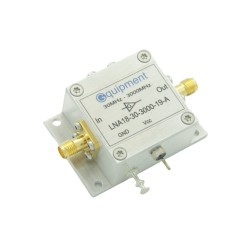
All RF amplifiers in this category are wideband designs with a flat frequency response and a high degree of linearity. The amplifiers require only a single positive power supply which is also regulated and filtered against external power induced noise. A solid aluminum housing acts as a heat sink and creates a stable thermal environment. All RF amplifiers are well matched (50 ohm) over the entire operating range.
-
DC-blocks and Bias-Tees
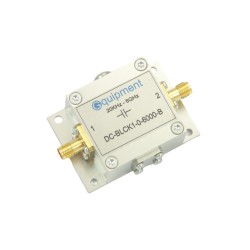
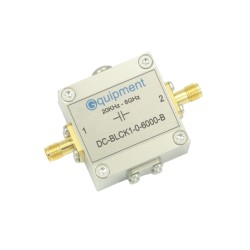
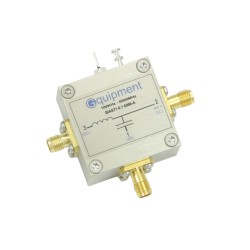
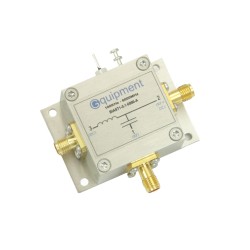
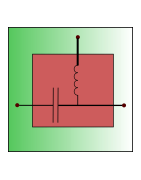
The DC blocks and Bias-Ts block or inject a DC voltage onto a coaxial RF link. DC blocks are used to protect equipment and/or to improve the accuracy of measurements. Bias-Ts have many applications that all revolve around providing a DC voltage onto an RF link in order to carry DC power and an RF signal over the same link. For example, they are used to power laser diodes in telecommunications systems, to measure the S-parameters of active discrete components, and to supply power to external LNAs.
The DC blocks and Bias-Ts in this category are all broadband devices.